Automation rules and automated behavior
Set keywords, intent recognition, replies, and operational rules in one place, and keep human boundaries around automated behavior.
Purpose
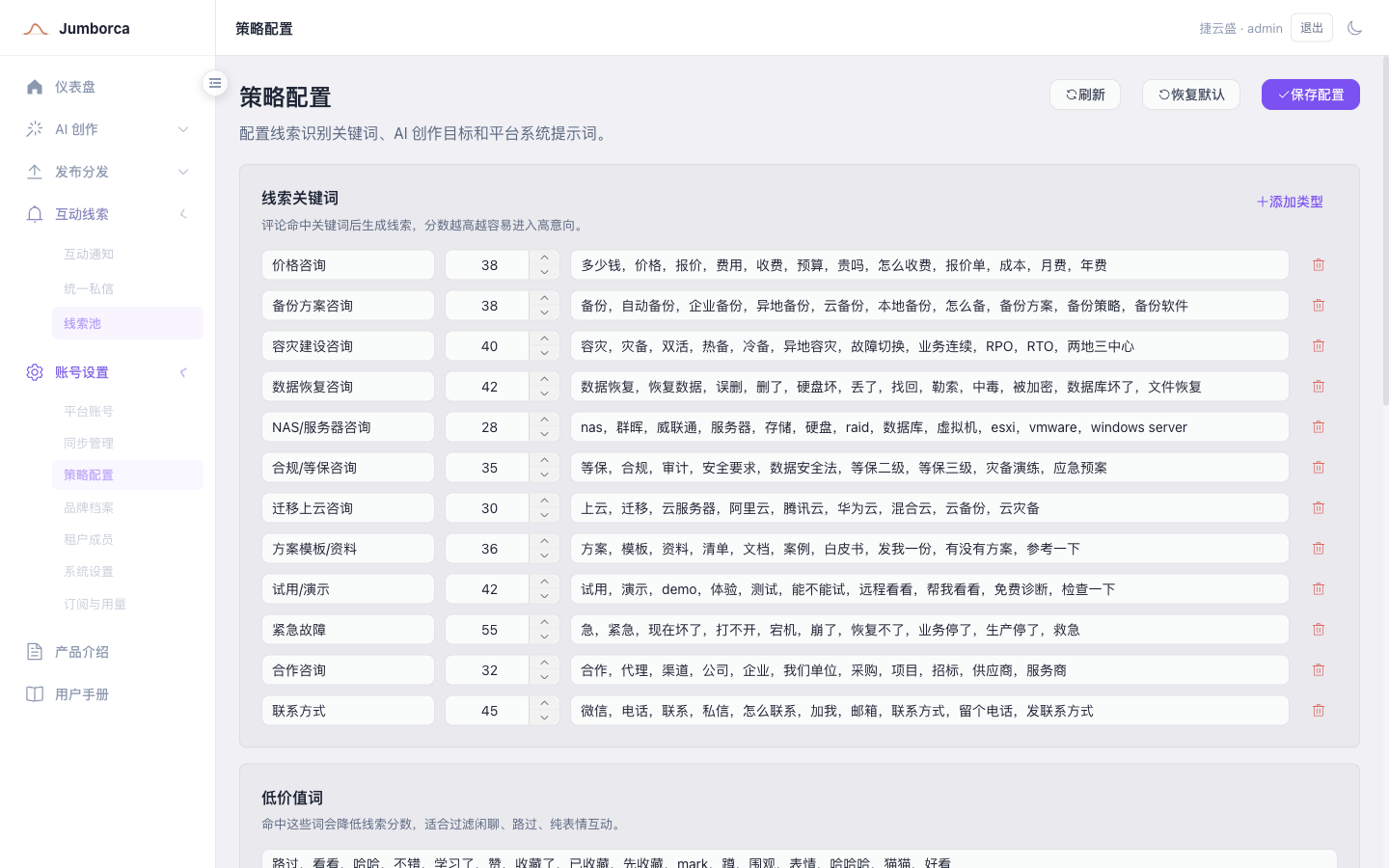
Automation rules turn your team's experience into a single set of rules, such as target customer signals, intent keywords, low-value keywords, trending keywords, AI content goals, and the system prompt for each platform. Changing the rules affects new tasks created after you save; it does not automatically re-evaluate past interactions or rewrite content that has already been generated.
Keyword scores are used to calculate lead intent. High-scoring keywords should represent a clear need, such as price inquiries, proposals, implementation, and contact details. Do not score broad industry terms too high, or ordinary discussion may be identified as a sales opportunity.
Rule design
- Start with a small number of clear rules, validate them against real samples, and only then expand the scope.
- High-risk industries, complaints, price commitments, and questions involving personal information must be configured for human takeover.
- Maintain positive signals and exclusion conditions together to reduce false judgments.
- Record when the rules were changed, who is responsible, and the validation results.